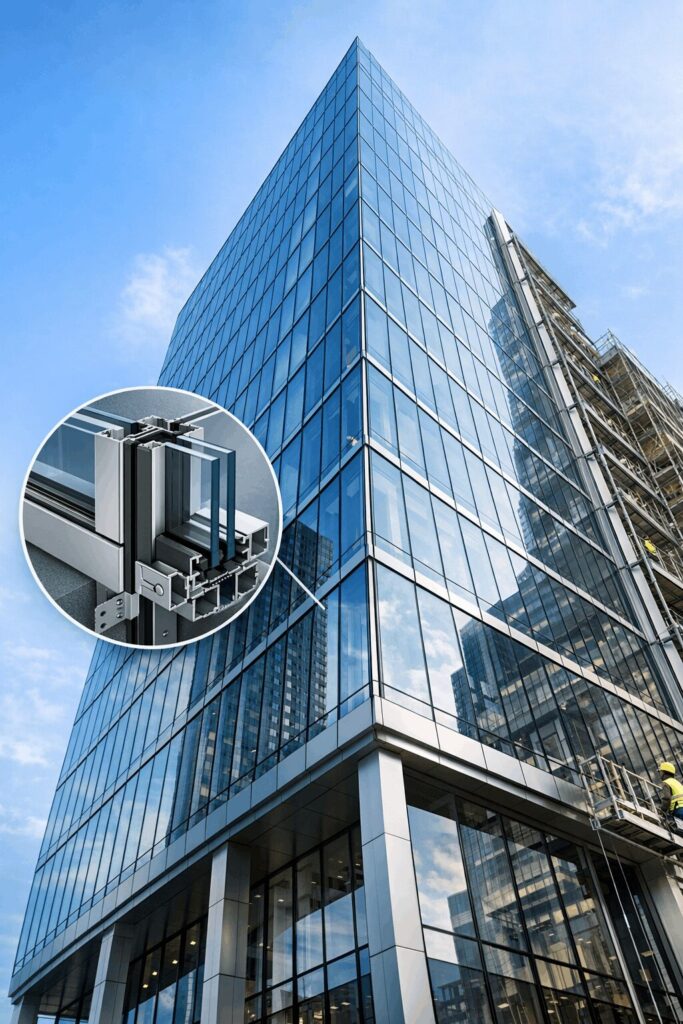
Modern architecture increasingly relies on advanced facade technologies that combine aesthetic design, structural performance, and energy efficiency. One of the most widely used solutions in contemporary commercial buildings is the aluminium curtain wall system. From high-rise office towers to airports and shopping malls, curtain walls have become a defining element of modern building envelopes.
In this article, we will explain what an aluminium curtain wall system is, how it works, its main components, and why it is widely used in modern construction.
What Is a Curtain Wall System?
A curtain wall system is a non-structural outer covering of a building. Unlike traditional walls, curtain walls do not carry the structural load of the building. Instead, they are attached to the building’s structural frame—usually concrete or steel—and transfer their loads to that structure.
The primary functions of a curtain wall are:
Protect the building from weather elements
Provide thermal and acoustic insulation
Allow natural daylight through large glass surfaces
Enhance the architectural appearance of the building
Aluminium is the most commonly used material for curtain wall framing because of its strength, durability, and lightweight properties.
Main Components of an Aluminium Curtain Wall System
1. Aluminium Frame
The frame is the structural backbone of the curtain wall system. It is composed of vertical members called mullions and horizontal members called transoms. These aluminium profiles support the glass panels and transfer wind loads to the building structure.
Aluminium is preferred because it offers:
High strength-to-weight ratio
Excellent corrosion resistance
Design flexibility
Long service life
2. Glass Panels
Glass is the most visible element of curtain wall facades. Modern buildings often use double or triple glazing systems that provide thermal insulation while maintaining transparency.
Common glass types include:
Tempered safety glass
Laminated glass
Low-E coated glass for energy efficiency
Insulated glass units (IGU)
These glass systems help improve energy performance and indoor comfort.
3. Anchors and Brackets
Curtain wall systems are attached to the building structure through anchors and brackets. These components allow the facade to accommodate structural movement, thermal expansion, and wind loads without damaging the system.
Proper engineering of anchors is essential to ensure long-term structural stability.
4. Gaskets and Sealants
Weatherproofing is critical in facade systems. Rubber gaskets and silicone sealants are used to create airtight and watertight joints between glass panels and aluminium profiles.
These materials prevent:
Water infiltration
Air leakage
Thermal bridging
Types of Aluminium Curtain Wall Systems
There are several types of curtain wall systems used in modern construction. The most common include:
Stick Curtain Wall Systems
In stick systems, individual aluminium profiles and glass panels are installed piece by piece on site. This method offers flexibility and is suitable for smaller projects or buildings with complex geometries.
Unitized Curtain Wall Systems
Unitized systems consist of pre-assembled facade panels manufactured in a factory. These large panels are delivered to the construction site and installed quickly using cranes.
Advantages include:
Faster installation
Higher quality control
Reduced on-site labor
Improved installation accuracy
Unitized systems are commonly used in high-rise buildings and large commercial projects.
Advantages of Aluminium Curtain Wall Systems
Aluminium curtain walls provide several advantages compared to traditional facade systems.
Lightweight Structure
Aluminium is significantly lighter than steel while maintaining high structural strength. This reduces the overall load on the building structure.
Modern Architectural Design
Curtain wall systems allow architects to design large transparent glass facades, creating visually striking buildings with natural daylight.
Durability and Low Maintenance
Aluminium is naturally resistant to corrosion and weather conditions. With proper finishing such as anodizing or powder coating, curtain wall systems can last for decades with minimal maintenance.
Energy Efficiency
Modern curtain walls incorporate insulated glass units and thermal breaks, improving the building’s energy performance and reducing heating and cooling costs.
Flexibility in Design
Aluminium profiles can be engineered into various shapes and configurations, allowing architects to create custom facade solutions for unique building designs.
Applications of Curtain Wall Systems
Aluminium curtain wall systems are widely used in various types of buildings, including:
Office towers
Airports
Hotels
Shopping centers
Hospitals
Universities
Residential high-rise buildings
Their ability to combine structural performance with modern aesthetics makes them a preferred facade solution in contemporary architecture.